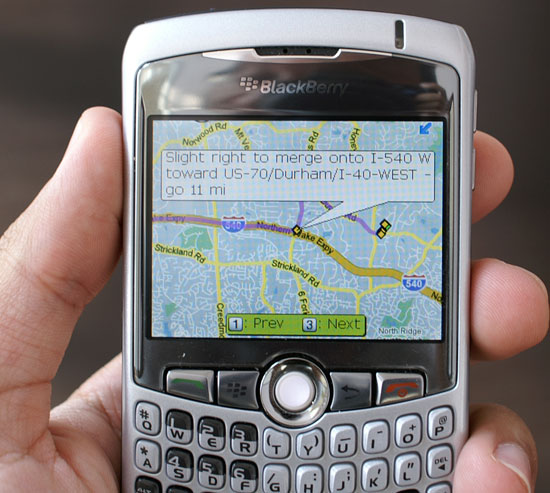
An American woman, Lauren Rosenberg, is suing Google, the search engine giant, because she was hit by a car after following its "safe" online mapping service. Rosenberg, is claiming damages from Google because she was injured while taking a "safe" route recommended by it.
According to her claim filed, she sustained injuries and "emotional suffering" from the accident, which occurred after she following directions on her BlackBerry. According to her lawsuit, Google Maps had led her to a highway without sidewalks that was "not reasonably safe for pedestrians".
Thursday, June 03, 2010
Wednesday, June 02, 2010
Towed for Security
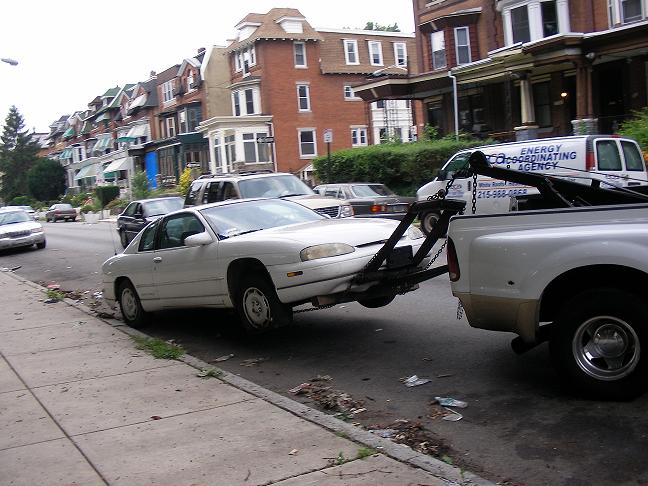
A driver was forced to pay £150 to get his car back after police confiscated it because he left a window open. Marcus Morris was told that police they had taken his VW Polo because the open window - which he had accidentally left down - meant the vehicle was at risk of theft.
Mr Morris, 25, had parked the car near to Leeds city centre as he went for a job interview but returned an hour-and-a-half later to find it had gone. He contacted West Yorkshire Police believing it had been stolen but was told they had removed it to protect it from thieves.
Mr Morris, said: "I couldn't believe it. It seems outrageous. So what if I had left my window open? If anything had been taken then it'd have been my own fault." Police told him a window had been left open and a CD wallet was in the back of the car. The vehicle had been taken to a storage facility.
When Mr Morris collected his car the next morning he was handed a bill for £150. "I'm not working at the moment and that's a lot of money for me. It's money I don't think I should have had to pay," he said.
West Yorkshire Police said it made no apology for taking action. Chief Insp Elizabeth Belton said: "Officers regularly patrol our communities looking for opportunities to prevent crime, which is exactly what has happened on this occasion. The vehicle was left insecure with valuables on show in an area with significant levels of car crime and we were unable to locate the owner. We make absolutely no apology whatsoever for the officer's actions, which have prevented this vehicle becoming a target for thieves. Had a thief got there first it would have been a very different story. We need people to take responsibility for their own property and take any valuables with them when they park up. We hope Mr Morris's story will serve as a reminder."
The charges made for the recovery and storage of vehicles are set nationally by the Government. Mr Morris confirmed he is taking legal advice in an attempt to recover the cost.
Sunday, May 30, 2010
Electronic Lockdown
India's President Pratibha Patil's trip to China faced a breach in protocol when her flight was delayed as one of the parliamentarians accompanying her arrived late to the airport. Mr.Raghuvansh Prasad Singh said that he was delayed because he could not understand how to use the electronic key to the executive hotel room he was staying in."I was not informed about what time I had to board the plane and I couldn't handle the electronic key to the lift and the room," the former rural development minister said.Official sources said Singh, along with the president and the official delegation, were staying at the super-deluxe Raffles Beijing Hotel where access to restricted VIP floors was through an electronic key that the minister found difficult to handle.
President Patil was to take the flight at 9 a.m. but was delayed by 20 minutes. Since the special Chinese flight could not take off on time, other flights at the busy Beijing airport also got delayed, officials said.
Saturday, May 29, 2010
Ambulance for the Obese
Britain’s first specially adapted ambulance for carrying obese patients hit the road a few days back and is capable of transporting people weighing more than 400 kg.South Central Ambulance Service built the vehicle specifically to tackle the demands of a sharp rise in call-outs to overweight patients. Its cavernous interior is more akin to a hospital ward than the back of an ambulance, with room enough for four beds and is fitted with all the latest life-saving equipment.
While a standard ambulance can only carry a person weighing up to 120 kg, the adapted mini-truck can carry patients as heavy as 250kg stone including their trolley. The vehicle can take a single person weighing up to 420 kg as well as the ambulance's two dedicated members of support staff.
Its most significant modification is a heavy-duty tail lift which can be lowered to the ground allowing even the heaviest patients to be raised into the ambulance at the push of a button.
James Keating-Wilkes, a spokesman for the trust, said it had resolved to create the ambulance after a rise in injuries sustained by staff trying to lift obese patients into ordinary ambulances.He said: “In recent years we have witnessed a dramatic rise in the number of calls to transport obese patients to hospital. We also struggled in many situations because our ambulances were not capable of carrying some very heavy patients and there were also a lot of injuries sustained trying to lift them.
He added that trust already owned the vehicle – originally intended to transport emergency heart patients – but decided to modify it at a cost of £5,000 as it was rarely being used.
As it is capable of carrying up to four ordinary sized patients, the vehicle can also now be used for attending major incidents where there are multiple casualties.
Its most significant modification is a heavy-duty tail lift which can be lowered to the ground allowing even the heaviest patients to be raised into the ambulance at the push of a button.
James Keating-Wilkes, a spokesman for the trust, said it had resolved to create the ambulance after a rise in injuries sustained by staff trying to lift obese patients into ordinary ambulances.He said: “In recent years we have witnessed a dramatic rise in the number of calls to transport obese patients to hospital. We also struggled in many situations because our ambulances were not capable of carrying some very heavy patients and there were also a lot of injuries sustained trying to lift them.
He added that trust already owned the vehicle – originally intended to transport emergency heart patients – but decided to modify it at a cost of £5,000 as it was rarely being used.
As it is capable of carrying up to four ordinary sized patients, the vehicle can also now be used for attending major incidents where there are multiple casualties.
Friday, May 28, 2010
Marine Security
The US Navy says dolphins and sea lions will stand guard this year at a submarine base to detect any underwater swimmers who might approach the base on Hood Canal.The US Navy is keeping security details secret, but the environmental impact statement for the project said there would be fewer than 20 animals kept in heated enclosures when not on patrol in Washington state. Marine mammals have been used as guards for years at another Trident submarine base at King's Bay, Georgia. Navy spokesman Tom LaPuzza in San Diego told the Kitsap Sun that Atlantic bottlenose dolphins and California sea lions are ready to go on patrol at Bangor. The dolphins can find an intruder and release a beacon. Sea lions can attach a cuff to a swimmer's leg.
Subscribe to:
Comments (Atom)