Other places on this site

Showing posts with label car. Show all posts

Wednesday, June 30, 2010

Unique Exemption

The Terrafugia Transition, a light aircraft that can convert into a road-legal automobile, is to go into production after being given a special weight exemption by the US Federal Aviation Administration. 
he Transition was designed as a "light sport" aircraft, the smallest kind of private aeroplane under FAA classification, with a maximum weight of 1,320lb. But the manufacturers found it impossible to fit the safety features - airbags, crumple zones and roll cage, for instance - that are required for road vehicles of that weight. Uniquely, however, the FAA has granted the Transition an exemption - allowing it to be classified as a light sport aircraft despite being 120lb over the limit.
Light sport aircraft licences require just 20 hours' flying time, making them much easier to obtain than full private licences.
The two-seater Transition can use its front-wheel drive on roads at ordinary highway speeds, with wings folded, at a respectable 30 miles per gallon. Once it has arrived at a suitable take-off spot - an airport, or adequately sized piece of flat private land - it can fold down the wings, engage its rear-facing propellor, and take off. The folding wings are electrically powered.
Its cruising speed in the air is 115mph, it has a range of 460 miles, and it can carry 450lb. It requires a 1,700-foot (one-third of a mile) runway to take off and can fit in a standard garage.
Terrafugia says that one of the major advantages of the Transition over ordinary light aircraft is safety - in the event of inclement weather, it can simply drive home instead of either being grounded or flying in unsafe conditions.
The company says that 70 people have ordered the car, leaving a $10,000 (£6,650) deposit each. The car is expected to retail at $194,000 (£129,000). Deposits are held in escrow, meaning that should the company go bankrupt before delivery, the money will be refunded.
Thursday, June 03, 2010

Missed Map

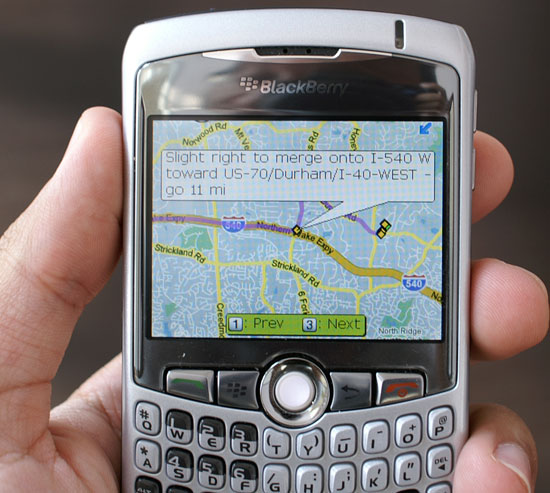
An American woman, Lauren Rosenberg, is suing Google, the search engine giant, because she was hit by a car after following its "safe" online mapping service. Rosenberg, is claiming damages from Google because she was injured while taking a "safe" route recommended by it.
According to her claim filed, she sustained injuries and "emotional suffering" from the accident, which occurred after she following directions on her BlackBerry. According to her lawsuit, Google Maps had led her to a highway without sidewalks that was "not reasonably safe for pedestrians".

Wednesday, June 02, 2010

Towed for Security

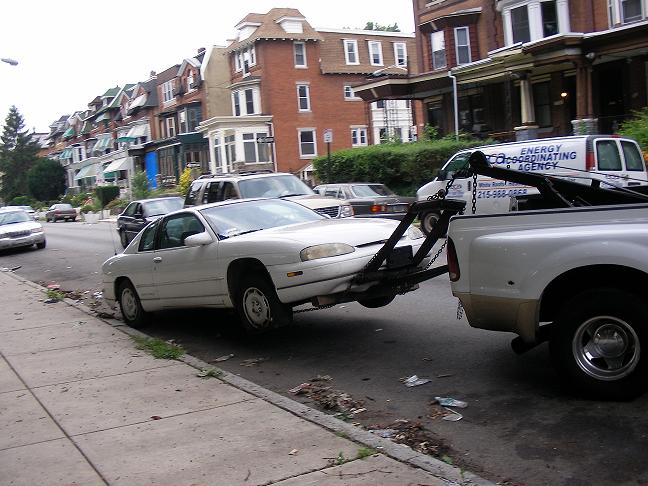
A driver was forced to pay £150 to get his car back after police confiscated it because he left a window open. Marcus Morris was told that police they had taken his VW Polo because the open window - which he had accidentally left down - meant the vehicle was at risk of theft.
Mr Morris, 25, had parked the car near to Leeds city centre as he went for a job interview but returned an hour-and-a-half later to find it had gone. He contacted West Yorkshire Police believing it had been stolen but was told they had removed it to protect it from thieves.
Mr Morris, said: "I couldn't believe it. It seems outrageous. So what if I had left my window open? If anything had been taken then it'd have been my own fault." Police told him a window had been left open and a CD wallet was in the back of the car. The vehicle had been taken to a storage facility.
When Mr Morris collected his car the next morning he was handed a bill for £150. "I'm not working at the moment and that's a lot of money for me. It's money I don't think I should have had to pay," he said.
West Yorkshire Police said it made no apology for taking action. Chief Insp Elizabeth Belton said: "Officers regularly patrol our communities looking for opportunities to prevent crime, which is exactly what has happened on this occasion. The vehicle was left insecure with valuables on show in an area with significant levels of car crime and we were unable to locate the owner. We make absolutely no apology whatsoever for the officer's actions, which have prevented this vehicle becoming a target for thieves. Had a thief got there first it would have been a very different story. We need people to take responsibility for their own property and take any valuables with them when they park up. We hope Mr Morris's story will serve as a reminder."
The charges made for the recovery and storage of vehicles are set nationally by the Government. Mr Morris confirmed he is taking legal advice in an attempt to recover the cost.

Tuesday, May 11, 2010

Im-mobile house

A man makes his car his permanent home when it breaks down in the middle of te Arabian Desert.
Saad al-Qahtani was driving in the western Saudi desert between Mecca and Jeddah one day 18 years ago when his beloved Chevrolet Suburban broke down. He couldn’t fix it, so he did the next best thing: he stayed there and made it his home. The 61-year-old man’s parents and sisters had all passed away by that time, according to the Saudi Gazette on Saturday. He had lost his security guard job for health reasons, tried cattle ranching but the livestock all went missing, so he began driving on odd jobs in the area until the fateful day when the huge SUV gave in. Instead of calling a mechanic, he decided to make it his permanent home.


No need to make such a decision when your car breaks down and no mechanic is near, use Smartworks 33 Piece Emergency Roadside Toolkit from Amazon.com

Saturday, April 24, 2010

Cyclist's Dream

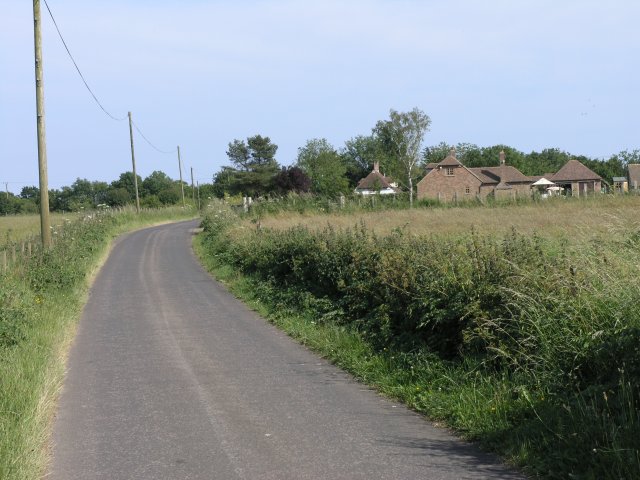
The area reserved for pedal-powered transport measures 6.5ft (2m) wide, leaving just 4.5ft (1.4m) for cars, lorries and buses to squeeze through. Stretching up a steep hill in Dorset, England, the road markings have bemused motorists, who struggle to fit their cars in the space provided. The cycle lane, which appears only on one side of the road, comes to an abrupt stop before the top of the hill and disappears entirely.
It has also raised safety concerns as people are worried it will confuse conscientious drivers and force them into the opposite carriageway in front of oncomming vehicles.
Jonathan Mears, a 39-year-old architect who lives nearby, said: "It's utterly ridiculous. The cycle lane is wide enough to stage the Tour de France. It's astounding that much of the road has been designated for just a few cyclists, when it's relatively narrow anyway.They've given over more room to the cycle lane than they have to the road - there isn't even enough room for an average sized car to drive in the space designated. I haven't seen anyone cycling up there yet, but I hope they appreciate it when they do."
Brian Kerry, another local resident, said: "It's ludicrous. When I first saw it, it didn't occur to me it was a cycle lane because it's just too wide. It just seems stupid. A few people cycle up there but most of the cyclists dismount and walk up the pavement."
But the lane has been defended by Poole Borough Council, which said the lines are for guidance only and drivers were permitted to cross them. Steve Dean, principal engineer, said: "The cycle lane is designed to encourage motorists to give more room to cyclists as they tackle the steepest section of Constitution Hill. Vehicles travelling up Constitution Hill are able to straddle the cycle lane as the markings are advisory and as such are there primarily to act as a reminder to motorists to give space to cyclists. The lane has been marked in accordance with national guidance but further signs and cycle logos are scheduled to be added and we hope this will make the situation clearer for all road users. We are currently monitoring the use of the lane and most drivers seem to be using it appropriately."
But Paul Watters raised safety fears over it. He said: "It seems very confusing and unusual. I suspect it has been put there because of the danger of wobbling cyclists or to allow a faster cyclist to overtake a slower one without going into traffic. But the average width of a car is around 6ft at least.Most drivers are sensible and would be concerned about crossing the line. They may be worried about breaking the law, even though they are allowed to cross it. It seems there is an increased risk that to avoid straddling the lane, cars will be more inclined to cross the centre line and will be in the path of oncoming cars. "


Why don't you try to benifit from this with the wide range of Cycles form Amazon.com.

Friday, March 26, 2010

Record Insurance

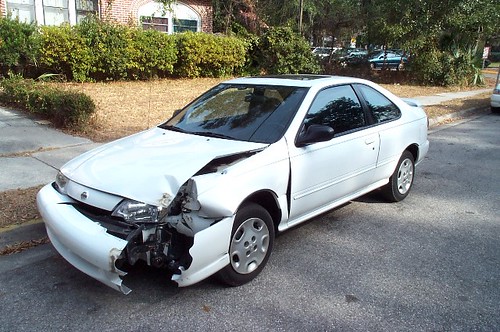
An insurance company is facing a record payout for a car crash after a motorist caused £300,000 damage to a Pagani Zonda S super-car during a test drive. The driver was borrowing the £528,000 sports car from its owner when he spun out of control on a narrow country lane near Aberdeen.
The Italian-made vehicle, which can reach speeds of 220mph, hit a telegraph pole before smashing through a fence. The motorist, whose identity has not been revealed, escaped the mangled wreckage unhurt.
Insurance firm Aviva says the £300,000 payout is the largest in the UK.

Learn to get the best out of your insurance by reading Principles of Risk Management and Insurance or Increase Your Insurance Sales, Retention & Referrals Now!!! from Amazon.com

Wednesday, October 28, 2009

Old road

The first road atlas of its kind in western Europe, a 17th century book showing a highway network in England and Wales of just 73 roads, is to be sold at auction for up to £9,000. The route atlas, published in 1675, includes 100 double pages of black and white maps laid out in continuous strips depicting the major roads and crossroads across England and Wales. The work from the Britannica first volume ­ also marks the first time in England that an atlas was prepared on a uniform scale, at one inch to a mile. The 17th century map-maker claimed 26,600 miles of road was surveyed for preparing the atlas.

Sunday, October 25, 2009

Pond power


Driven by fluctuations in oil prices and seduced by the prospect of easing climate change, experts are intensifying efforts to squeeze fuel out of a promising new organism: pond scum. As it turns out, algae - slimy, fast-growing and full of fat - is gaining ground as a potential renewable energy source. Experts say it is intriguing for its ability to gobble up carbon dioxide, a greenhouse gas, while living happily in places that are not needed for food crops. While no one has found a way to mass produce cheap fuel from algae yet, the race is on. University labs and start-up companies across the country are getting involved.